
A New Shade of Blue
- Aug 16, 2022
- 2 min read
I'm always on a quest for new hardy perennials, especially ones that bloom in the summer and fall when there is a lull in flower color. I must say I don't blame them, what plant would want to bloom in this heat and humidity? But, alas, I feel a change in the air, and plants too sense the shortening days and ever so slightly cooler nights.
As we enter late August, we are beginning a time of transition, a season of late summer blooms. And to me, this time is particularly exciting, especially given the endless heat that we've endured so far. Summers can be so brutal, so I definitely look forward to this time almost as much as I look forward to spring after winter.
Scutellaria ocmulgee is a native wildflower from a large genus in the humongous mint family. Skullcaps are native to most temperate regions and have been used for eons in traditional medicine. In China, for example, the genus has been used to treat anything from allergies to cancer. The common name, skullcap refers to the oddly rounded calyx, or sepal, which is most often observed as the flowers age into fruit. For our ancestors, this apparently reminded them of a tight-fitting Medieval skull cap. I, on the other hand, identify the plant by the upright clusters of blue, hooded, mint-like flowers.

Because of its flower, it could be confused with relatives, like Salvia. But with its distinctive sepals and lack of foliage fragrance, you should be able to distinguish it, especially if you are in the woods, I can think of no other native like it, except for perhaps, Salvia azurea. (See photo below)
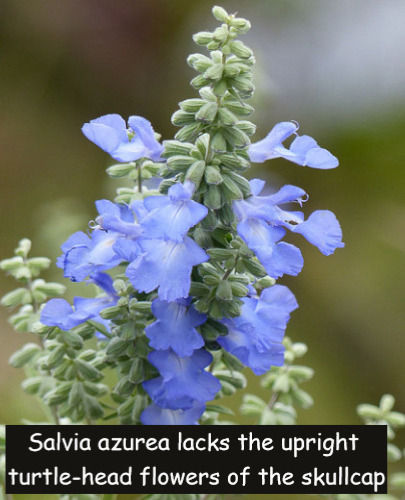
Because of its horticultural obscurity and rarity in the wild, it can be hard to find for sale. However, I've seen these offered at native plant sales and at nurseries like Nearly Native and Plant Delights. Once established in your garden, it seems to thrive in dappled light to full sun and without much attention. I've even observed seedlings underneath my mother plant.
The intense sky blue color of the mid-August flowers combines well with other plants, like, for instance, the red and yellow early-flowering spider lilies, like Lycoris radiata var. pumila and Lycoris chinensis. I could also see an attractive pairing with rain lilies and dwarf golden lantana, like 'Chapel Hill Gold'.

So, I'd urge your to seek out this late-blooming treasure and pair it with other summer perennials. Though it isn't a gaudy showstopper, it definitely will grow on you.


Comments