
Alien Locusts
- Clifford Brock
- Aug 6, 2021
- 3 min read
Strange otherworldly invaders are eating my plants! The culprit is Romalea microptera, also known as the eastern lubber grasshopper. If you've ever seen one, you won't forget as they are unmistakable: black, large, with flashy red wings that scream DANGER; this deep south pest reminds me of something out of the Alien movies. It is my topic for today because of its dietary preferences...

Growing up in the south, I'd never really encountered lubbers until one summer. I remember visiting my great aunt's house on Warren St. in Monticello, and I saw this massive black grasshopper lumbering through the grass. My folks didn't really know its name, but they did tell me, "you only see these in town." It wasn't until my folks bought an old house in Hillsboro that I would reencounter this mysterious creature.
Their lifecycle is interesting. The larger females, up to 3 in. long, are usually seen in late summer in a ritualistic copulation with the smaller males. Apparently, there is a "dance" to this ritual that involves repeatedly opening the wings and hissing. I can attest to the hissing because when threatened, they also hiss. The females then lay many eggs, which survive the winter and then hatch forth in mid-spring with hundreds of tiny nymphs (the technical name for baby grasshoppers).

So you may ask, why am I so concerned about these creatures? Well, lubbers absolutely love plants in the Amaryllis family, which also happens to contain many of my favorites: Lycoris (spider lilies), Aztec lilies, Amaryllis, rain lilies (Zephyranthes), Schoolhouse lilies (or Rhodophiala). When we first moved to the old house, I had been waiting to see the first red spider lily bloom of the season. It had sprung from the ground a day earlier, but when I went to see it unfurled, something had chewed a big hole in the stalk, and it was lying on the ground! I was livid! I immediately snatched up the culprit, who was feasting on another lily, and decapitated it with my bare hands... I've since learned that these creatures emit a toxin that can cause irritation, so from now on, I wear gloves. I'm not normally a violent person, but I lose any self-control when something is eating or disturbing my plants.
According to the dictionary, the word "lubber" refers to a "big, clumsy, stupid fellow who lives in idleness," yet while these insects are somewhat slow, they are not lazy! They are on a mission- a mission to eat all my favorite species! I do not advocate using pesticides to fight any infestation, so with these, the best control is to manually eliminate them.
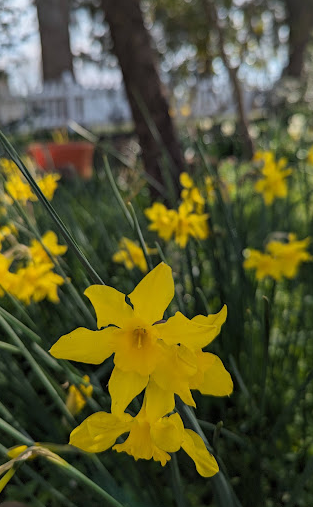
Like I said earlier, for whatever reason, this insect seems most prevalent around old historic homes. Perhaps it is the prevalence of large quantities of old bulbs like daffodils and spider lilies. I've even heard some people call them cemetery locusts because of their prevalence around old cemeteries. They tend to "migrate" to new locals, for even though I eliminate them from our landscape, every July, I see them jumping across the highway from our neighbor's lawn. I'm guessing they can"smell" expensive bulbs!

While most of our bulbs are extremely resilient and can survive some degree of herbivory from lubbers, I'm sure a heavy infestation would have a detrimental effect on next year's blooms. So if growing old bulbs is your thing, I'd urge you to scout your garden every morning and evening for these easy-to-spot pests. I'd never want them to disappear completely, but controlling their numbers is essential.


Comments