
Soil Snob
- Jul 24, 2022
- 5 min read
Gardeners are soil-obsessed people. We are fixated on it.. obsessed with its color, smell, and comparing ours to our friends'. Why do we become so preoccupied with our dirt? In this essay, I seek to unravel my personal soil snobbishness and attempt to better understand what really makes a good soil for both containers and in the garden.
First off, there is a lot of mythology and misinformation regarding soil improvement. People, including me, have and will spend fortunes on soil amendments or "supplements." It is my opinion that products like the ones below make exaggerated or even perhaps unscientific claims of improving "water efficiency" and "ecological enhancement" etc... Savvy marketers and people who should know better are always coming up with new ways to convenience us to purchase the latest fads. And just as the proliferation in medical enhancing supplements and herbs has blossomed in recent decades, so too have "supplements" for our gardens. Yet I feel that almost all of these concoctions are completely unnecessary for creating a beautiful garden.

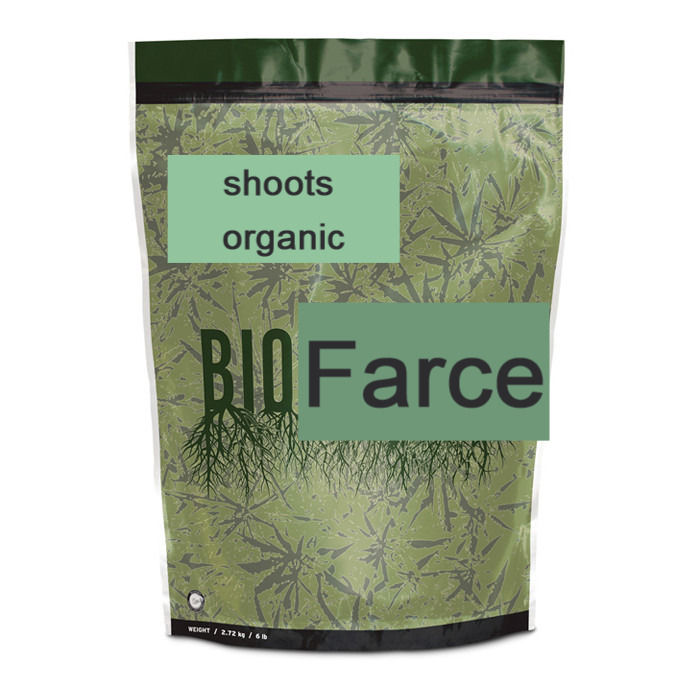
Even the soil mixes we purchase are amended with all sorts of unsubstantiated "enhancements". How do we cut through all the bs and make informed purchases that reflect what we really need in potting soil or fertilizer?
What one needs in potting soil is quite different than garden soil. Potting soils basically are mixtures of 3 main ingredients: pine bark, peat moss, and pearlite. They are designed to provide great drainage and to be realitavly lightweight for ease of transport. I've mistakenly used real garden soil in my pots only to lose everything. Never make this mistake, you will regret it!
Potting soils can also contain fertilizer, usually a slow-release type, like osmocote. In my opinon, based on working in the industry, all of those additional products like the micronutrients, mycorrhizae, and bio-active "boosters" are essentially a waste of money. They make us feel good, but they rarely contribute anything of value.
However, it should be noted that not all soilless mixes are created equal, and some of the cheaper products will actually kill your plants. Oftentimes companies will use raw shredded wood that hasn't been broken down, and this "green" or uncomposted material will cook your plants and steal all of the soil's nitrogen. I've also bought mixes that didn't drain properly and consequently rotted my plants. Because of such unpleasant experiences, I prefer creating my own potting soil from the raw ingredients. I also make my own because I grow plants that require excellent drainage, therefore I like to have at least half of my mix be pearlite.
Our garden soils consist of mineral particles that come from the rocks beneath them.
This is especially evident here in middle Ga, where our rocks are often so crumbly and weathered that they break into dust upon any pressure. Different rocks weather into different soils with varying pH and nutrient holding capacity. I'll save the pH discussion for a different post.
Now I'm by no means a geologist or soil scientist, and I don't want to get over my head, so let me emphasize only the most important elements to consider. Porosity is crucial! This refers to the amount of space between the particles, and good porosity enables water and gasses to move freely throughout the soil. For almost every type of plant, except perhaps aquatic or bog plants, it is paramount to have good drainage.
Minerals can be grouped by particle size, with clay being the finest, then silt, then the largest particles, which are sands and pebbles. Just as every person has a unique fingerprint, so too does every soil have a unique combination of these particles.
The particular "recipe" of our soil determines its water-holding capacity and ability to retain nutrients. For instance, soils dominated by sand particles will have excellent drainage, which will be a blessing in periods of excessive rainfall but might prove disastrous in droughts. Conversely, soils with excessive clay will often hold too much water and rot many of our water-sensitive species like gardenias and camellias. An often cited "ideal" ratio of soil particles is: 40% sand, 40% silt, and just 20% clay. This is often referred to as a good "loamy" soil.

A simple test often used to determine soil structure and drainage capacity is performed by digging a hole, filling it with water, and taking note of how quickly it drains. For more information, check out this video: https://www.youtube.com/watch?v=AnFFx8srRUs
Now all this is great, but what do we do if our soils aren't ideal? What if, for example, we have too much clay? Well, fear not, because there are ways to improve our soil and strategies for overcoming poor drainage without breaking the bank or your back.
What truly matters most is the top 4 or 5 inches of soil. Anyone who has divided plants or dug up anything knows that in most situations, the vast majority of roots occur in a thin"pancake" around the plant. Of course, there are exceptions, but you can do a lot to improve your gardening just by focusing on improving the topsoil, or A horizon.
In the 2nd growth forests around my home, I can clearly see the A horizon. It is the thin dark layer in which most of the tree roots can be found. In the wild, it is created by the yearly accumulation of organic matter and leaves. In our gardens, we can accelerate this natural process by topdressing our soils with compost or other sources of carbon. I prefer collecting leaves and allowing them to degrade, or sit and decompose, then applying the partially degraded remanents to the soil surface. Topdressing is basically all I do to my enhance my soil. I also top dress with an organic fertilizer, and my favorite brand is Plant Tone. I like it because it smells strongly of chicken manure, which has the added benefit of repelling deer and many other varmints. Plus a stinky fertilizer just feels like it is doing "something". Maybe it is just a psychological effect.

If you are cursed with heavy clay soils that retain too much water, it may be necessary for you to build up berms or create raised beds so that you can grow water-sensitive species, like Gardenia and Camellia. I've certainly killed my share of gardenias because the soils were just too heavy and water-logged. Also, take note of where the water pools or flows after heavy rains and avoid planting all but the most water-loving species in those areas. Reserve those areas for your Louisiana iris or swamp hibiscus.
Ok, enough of my rambling... just remember that a good soil must have good drainage! You can always provide the nutrients, organic matter, and extra water, but it is nearly impossible to correct a soil that doesn't drain!


Comments