
The Lawn Wars
- Sep 8, 2022
- 4 min read
Social media is full of memes encouraging us to plant more natives. And one frequent target is reducing or even eliminating the American lawn. In this essay, I seek to probe deeper into this growing movement and ask whether we should eliminate our turf.

Lawns have for a long time been our most dominant landscape feature. They were once maintained by grazing livestock but are now kept up via gas-powered mowers. Over the decades, highly manicured monocultured lawns have grown in size and this has been shown to reduce insect and bird diversity.
Another troubling product of the modern era is the rampant use of herbicides which are used to eliminate weeds. Like I said earlier this produces monocultures of grasses like Bermuda and zoysia that provide little to no benefit to pollinators. Before the age of modern herbicides, our lawns wouldn't have been as uniform and would have contained a multitude of flowering plants like dandelions and clover. While this is still the case in many rural places, an alarming number of suburban HOAs are requiring "weed control" and turf grass monocultures are increasingly the norm.
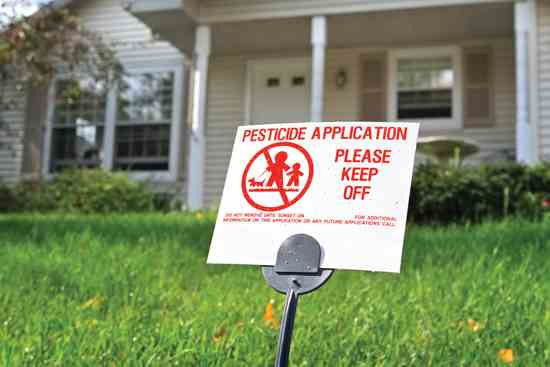
Therefore, it makes perfect sense that a movement, especially within the native plant community, would arise to reduce or even eliminate lawns. Their answer to this problem is for homeowners to convert more and more of their yards to native plant communities or gardens.
While I totally understand the argument against lawns, especially the modern hyper-manicured lawns, there are some important questions to consider before you transition to a native landscape.
One misconception I'd like to address is the idea that converting our lawns to gardens or flower beds will reduce the overall maintenance or upkeep. All those social media memes will have you believe that native landscaping is simple and requires little effort because "the land is just returning to its natural state". Yet having worked in many gardens, both personally and professionally, I can attest that this is simply not the case. Any collection of plants must be weeded and cared for... and the "natural" state of the land, especially here in middle Ga, is a thicket of invasive vines and shrubs. Let me be clear, in most yards, if you abandon mowing and weeding, you will end up with an impenetrable tangle of briars, trees, and shrubs- many of them exotic.
Periodic weeding must be performed in order to keep our landscapes free of invasives and aesthetically pleasing. Make no mistake about it, this will require lots and lots of hard work! All too often I see "fair weather" gardeners looking for an easy way out by converting their grass into a "wildflower" meadow or something akin. I can't say I'm surprised...this "fantasy" has been drilled into us by endless photos of beautiful and immaculate landscapes on social media and in gardening magazines. Rarely do they indicate how much work such spaces require.
While it is noble to plant larger flower beds full of native shrubs and perennials, we must be cognizant of the amount of labor that will be added to our already stretched thin schedules.
Then there is a purely aesthetic and utilitarian argument for leaving much of our landscape in grass. I would argue that the best way to draw the eye's attention to specific specimens or beds is to keep much of the landscape accessible and "blank" via a sort of neutral background of turf. The lawn serves us by allowing access and delineation, or separation between the neutrality and blankness of the lawn and the busyness of the planted beds. One could also achieve this effect by mulching large sections of the yard, however, unless you are prepared to routinely spray lots of roundup, this option will quickly become a maintenance nightmare. Mowing is simply the easiest and time-saving method for creating this blank backdrop to that we can show off color.
The analogy I like to think about is that of a house. A cluttered house with too many pieces of furniture is uninviting and overwhelming. While a house with just the right balance of "stuff" and blankness, is generally regarded as more attractive. Our lawns serve the function of carpet or tile. They allow us to focus more clearly on our tended areas.
Lawns also provide access. Of course, paths can also provide access, but one shouldn't underestimate the value of the ease of access when working in the yard.

My preference is shaped by my experience, particularly my childhood nostalgia for the old-fashioned yards of my elders. Those were often cluttered landscapes, breaking all the modern rules of design, but they all had a dynamic mix of perennials, shrubs, and trees in a sea of grass. The lawn, other than routine mowing, was relatively easy to manage. And I'm not talking about the type of highly manicured lawn you see in exclusive HOA landscapes, no I'm referring to simply mowing a mixture of grass and weeds and absolutely no chemical inputs. Just letting it be, not worrying about the dandelions, clover, or whatever else pops up.
So you may ask, what is it that we should be striving for if complete lawn eradication isn't for most of us? I suggest before we make some radical transition to a native landscape, consider what we are realistically capable of taking care of. Given that flower beds are high-maintenance endeavors, perhaps we should seriously contemplate all the extra work we'll have to do before we sell the mower.
Yet I agree we are way overdue for a landscape revolution here in the US. Converting more of our lawns to a more "wild" or horticulturally diverse landscape will invariably support more life. Finding the appropriate balance is key.


Comments