
White Turtleheads for Fall
- Clifford Brock
- Oct 11, 2021
- 2 min read
I recently rediscovered turtleheads. Back in the early 2000s, I became a native plant fanatic. I had begun my horticultural journey as an herb and fragrant plants-obsessed gardener, yet when I began my position at the State Botanical Garden of Georgia, I became enamored with natives. During this time, I voraciously devoured wildflower guidebooks and memorized scientific names. I've since moved on to embrace all hardy plants, but my "native period" was crucial in fostering a love for the rare and unusual.

Though I've forgotten many of the plants I learned during my impressionable 20s, I'm becoming reacquainted with them by getting a job at Nearly Native Nursery in Fayetteville. Such was the flood of nostalgia that overcame me when I re-encountered the white turtlehead growing at the nursery... it brought me back to those early days of learning new plants at my first real job at the Bot Garden. When something from our deep past resurfaces like this, especially a smell or song, it transports us. It can be the source of a much-needed re-wakening in our lives.
Enough with the philosophical waxing... I'm definitely feeling these first few sips of espresso!
Ok, so I must admit, I don't have a lot of personal experience with this plant, nor the genus. In fact, I've had to do a lot of googling just to write this short essay. The genus "Chelone" is derived from a Greek word that means "turtle-like", and if you've ever been up close and personal with the flower, you'll see the likeness. There are apparently 4 species native to the Eastern US, and I'm familiar with at least one cultivar, 'Hot Lips', as seen in the photo below.
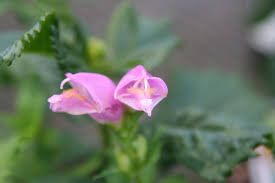
But the one that recently captivated me is the common white turtlehead (C. glabra). This is a large lanky plant in the wild, but in an open garden, it can become a shrub-like perennial (up to 6ft tall). I'm particularly drawn to it because of its late bloom (late September- October). They seem to prefer and thrive best in full sun with plenty of moisture. This is not a plant for a dry area!
Another alluring aspect of this plant is its color. White flowers often get overlooked in favor of color by many gardeners, yet there is something quite mysterious and beautiful about a white flower in peak bloom. And white flowers are striking in the light of the late evening and in the changing sunlight of autumn. I prefer to mix white flowers in with other colors. The combination of the yellow perennial sunflower (Heliathus simulans) with the white turtlehead was particularly picturesque.
Along with asters, salvias, and spider lilies, I'd urge you to make the white turtlehead a permanent fixture in your fall ensemble!


Comments