
Winter Weeds and Other Things...
- Clifford Brock
- Nov 27, 2022
- 3 min read
I dread the winter for so many reasons. The holidays probably being number one! It's the disruption of my routine. As an adult, I've come to realize that when something changes my day-to-day schedule in a significant way, my anxiety skyrockets. Though I've never been diagnosed as such, I suspect I fall somewhere on the autistic spectrum, and that would explain a lot of my "triggers" and idiosyncrasies.
Not only do the holidays stress me out. So too does the gloominess of winter, as I'm sure it does a lot of us. Especially those damp overcast days when the sun scarcely shines. Seasonal Affective Disorder (SAD) is real, and we need to remember that it is natural for us to feel tangible declines in energy and well-being during these dark months.
Despite all of this, there is actually a lot we can do outside in our gardens over winter. Our soils are almost always workable unless they are soggy wet or briefly frozen. As the joke goes, if you don't like the Georgia weather, just wait a day. Though we can get quite frigid, our cold snaps usually only last a couple of days, thankfully!
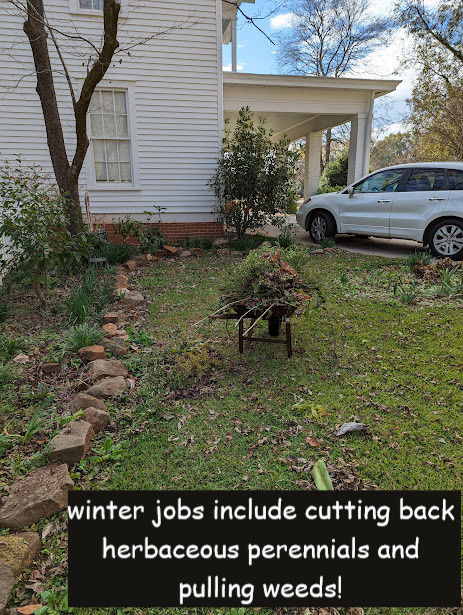
This is actually a time of growth for many plants, especially spring-blooming bulbs. Though you may not see any aboveground evidence, be assured that their roots are stockpiling water and nutrients. And many of our fall-blooming plants, like schoolhouse and red spider lilies are just now flushing out green leaves! They go dormant in summer as opposed to winter.
Unfortunately, weeds too are in full swing. Cool-season annual weeds like henbit, cleavers, and chickweed are sprouting in droves! Their lifecycle begins in fall and ends when they flower and seed in late spring just as temperatures begin to climb. And boy do they produce seed! I have literal carpets of seedling weeds... it can all feel a bit overwhelming.
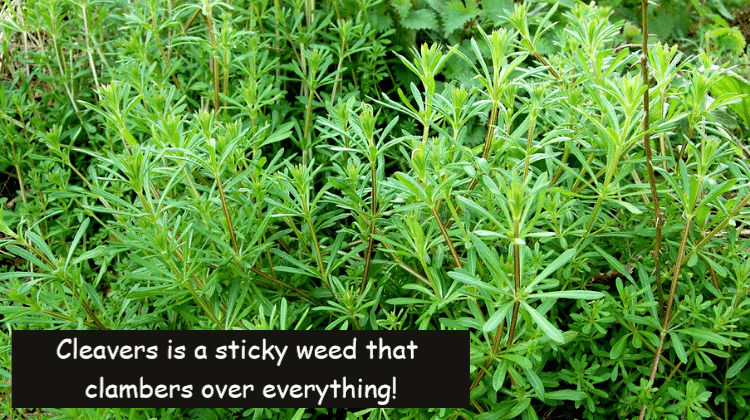
Every year, despite all my plans and ambitions, it always happens that I miss preventing the great "weed drop". Of course, it doesn't help that all my daffodils and early spring flowers are in peak bloom just when I need to be weeding the most!
But this year, I'm making more of an effort to eliminate as many winter weeds as I can before they get to that stage. Despite my pessimistic inclination, I'm trying to trick myself into thinking I can actually get ahold of this problem before all those seeds drop and next year's fate is sealed.

If you read the books you'll find many suggestions on how to rid your garden of these annual pests. One common practice is fall mulching with materials like bark or pine straw. However, I find that mulching is hard given my specific plant palette. I tend to mix a lot of wintering growing bulbs with self-seeding annuals, like Sweet Williams. Mulching is a great practice for improving soil quality, but it must be carefully applied so as to not shade out tiny bulbs and desired seeds. Nothing pains me more than seeing a bulb struggling to penetrate a thick layer of pine straw. If you lightly mulch after the spring foliage dies down (sometime just after Mother's day), you avoid suffocating these delicate treasures.

Herbicides and pre-emergents, like Preen, are also routinely employed to control winter weeds. While this may seem like a miracle solution, it too has significant downsides. Most notably, when we use chemicals like this there is almost always collateral damage. No matter how careful you are, when you spray herbicides, there is no possible way to prevent unintended damage, especially to plants in active growth. Pre-emergents act differently because they target germinating seeds. And while this might seem like a silver bullet, it is unfortunately not. My garden relies on annual reseeding, or self-seeding. Annuals like larkspurs and poppies germinate in the winter along with all the weeds. If I applied a pre-emergent now, I'd be effectively killing all my desirable cool season annuals. Plus I love random annuals/perennials popping up in my garden. If I applied these chemicals, I'd effectively halt all of those wonderful surprises.
So it seems the only way to deal with this problem is to either handpick all the weeds or just accept that they will be there. In reality, cool-season weeds rarely have any real negative impact on our desired plants. Yes, they can crowd out seedlings and minor bulbs, but they rarely kill established perennials. Probably the best attitude is one of tolerance and acceptance. Part of the joy of gardening is that it is never complete no matter how much work we put into it. It is always a work in progress, yet there is so much beauty even in its unfinished imperfection.


Comments